News
Honest Numbers: What Russians Think About the War and the Future
The ACF Polls & Surveys Department continues to conduct regular nationwide phone surveys of Russian citizens.
The latest survey results show a clear trend: optimism is collapsing, anxiety is rising, support for the war is minimal, and demand for negotiations is widespread.
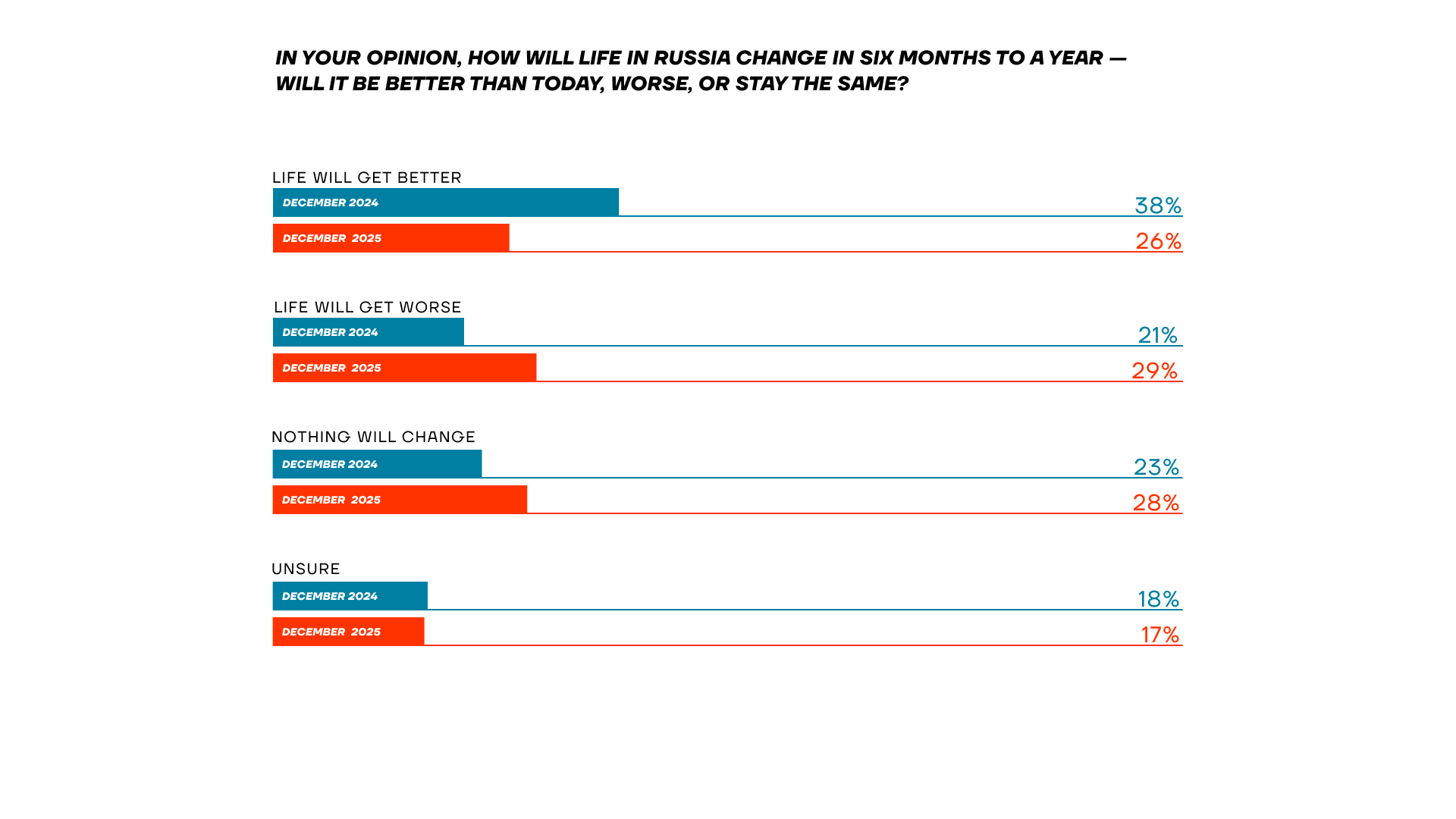
In December, we asked respondents: In your opinion, how will life in our country change in six months to a year — will it get better than today, get worse, or stay the same?
Just look at how the answers have changed over the course of a single year.
In 2024, 38% believed life would eventually improve. One year later, only 26% remained optimistic. Meanwhile, pessimism has grown: 29% now believe things will get worse.
This is what accumulated war fatigue looks like. Over the past year, the share of Russians who look to the future with optimism has fallen by nearly a third, reaching the lowest level recorded over the entire period of observation.
When we ask a more personal question, the picture is similar.
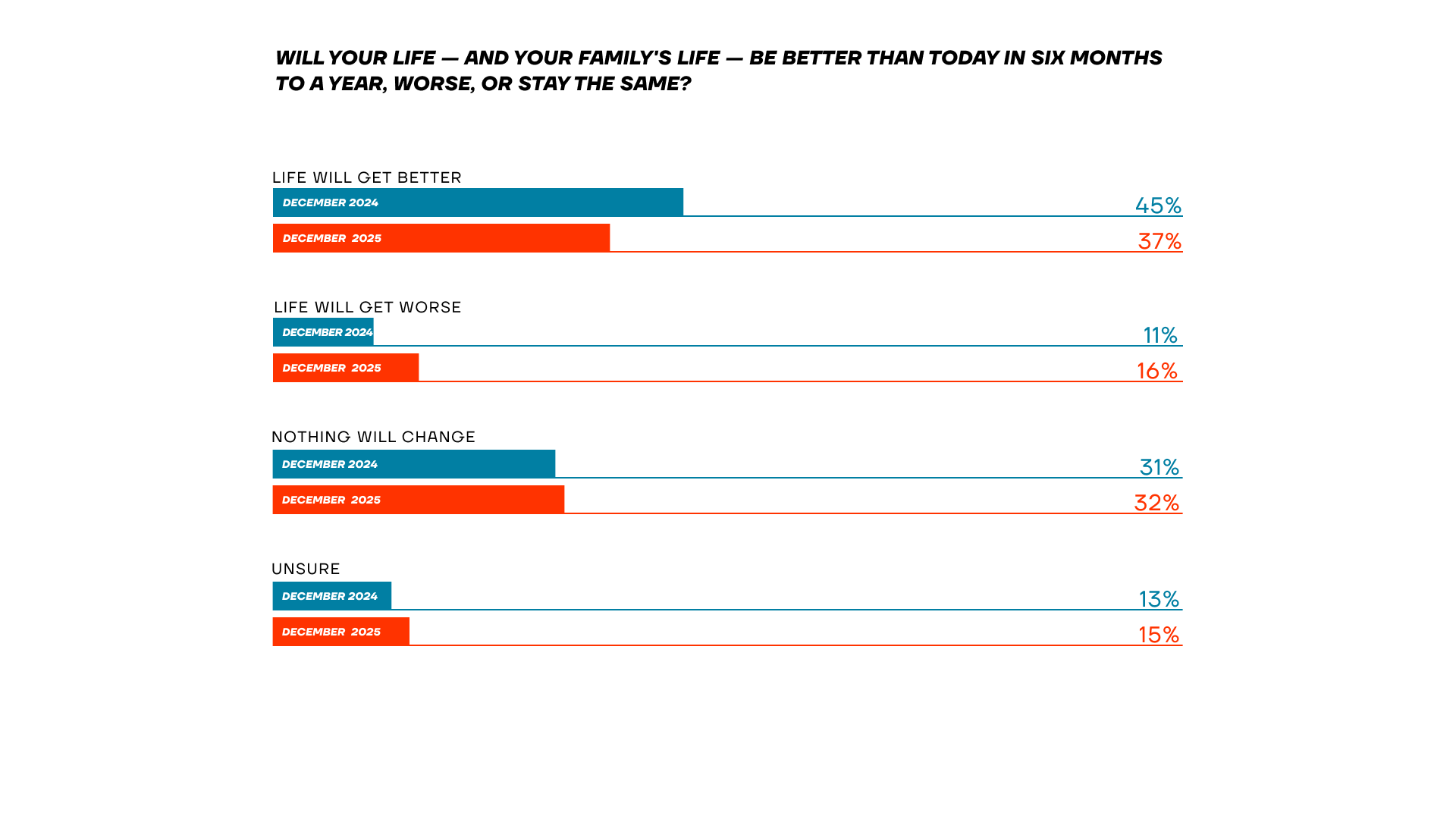
We ask:What about your own life, or your family’s life — in six months to a year, will it be better than today, worse, or unchanged?
Here, too, we see a decline. A year ago, 45% believed their lives would improve. Today, that number has dropped to 37%. At the same time, the share of those who expect their lives to get worse has increased by five percentage points.
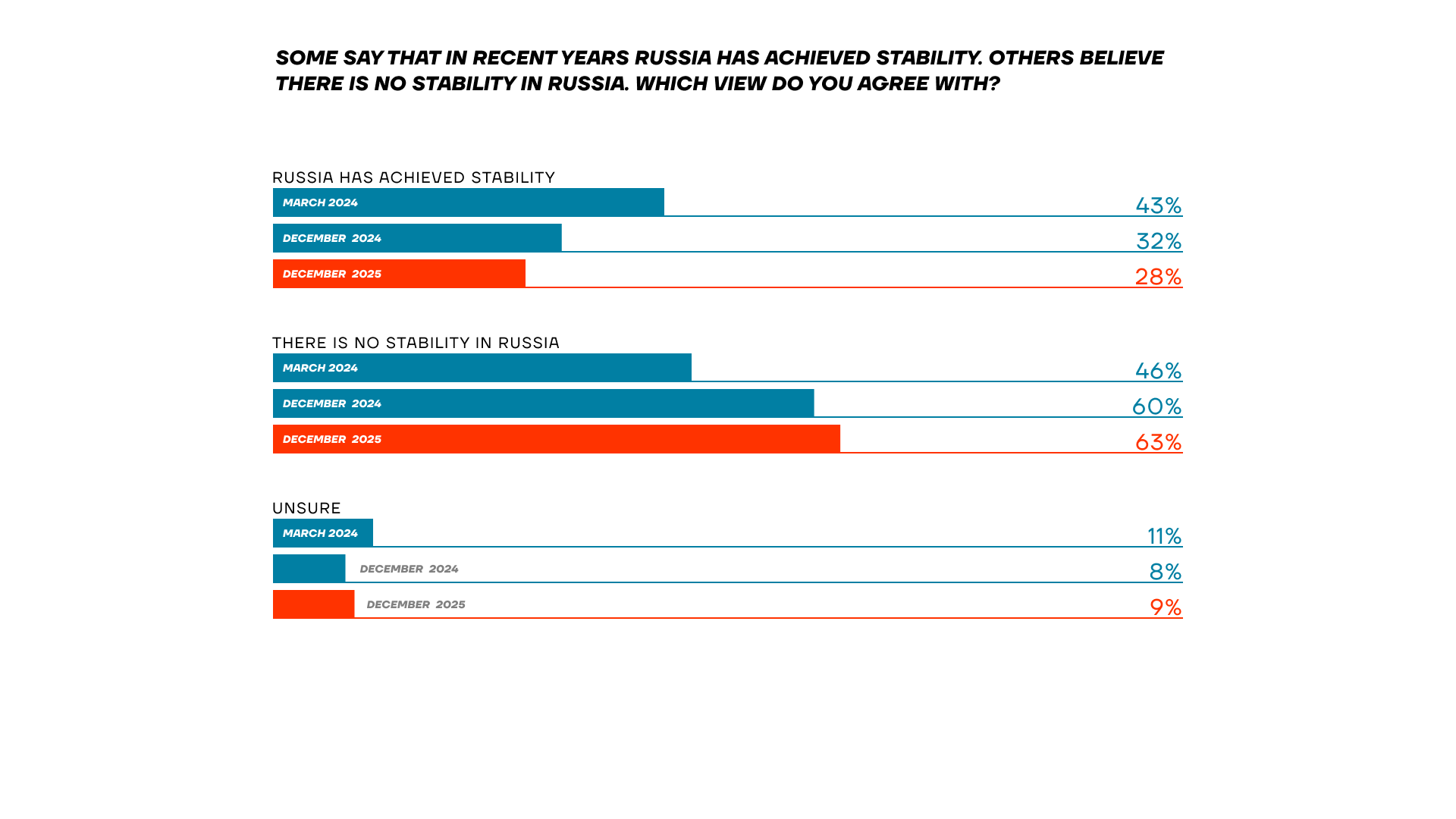
For 26 years, Putin and United Russia relied on one simple idea: “Yes, things may not be great, but at least there is stability”.
That idea no longer works. Russians no longer see any so-called “stability”.
A year ago, 60% said there was no stability in the country. Today, that figure has risen to 63%. Meanwhile, the share of those who believe stability exists has continued to shrink — now down to just 28%.
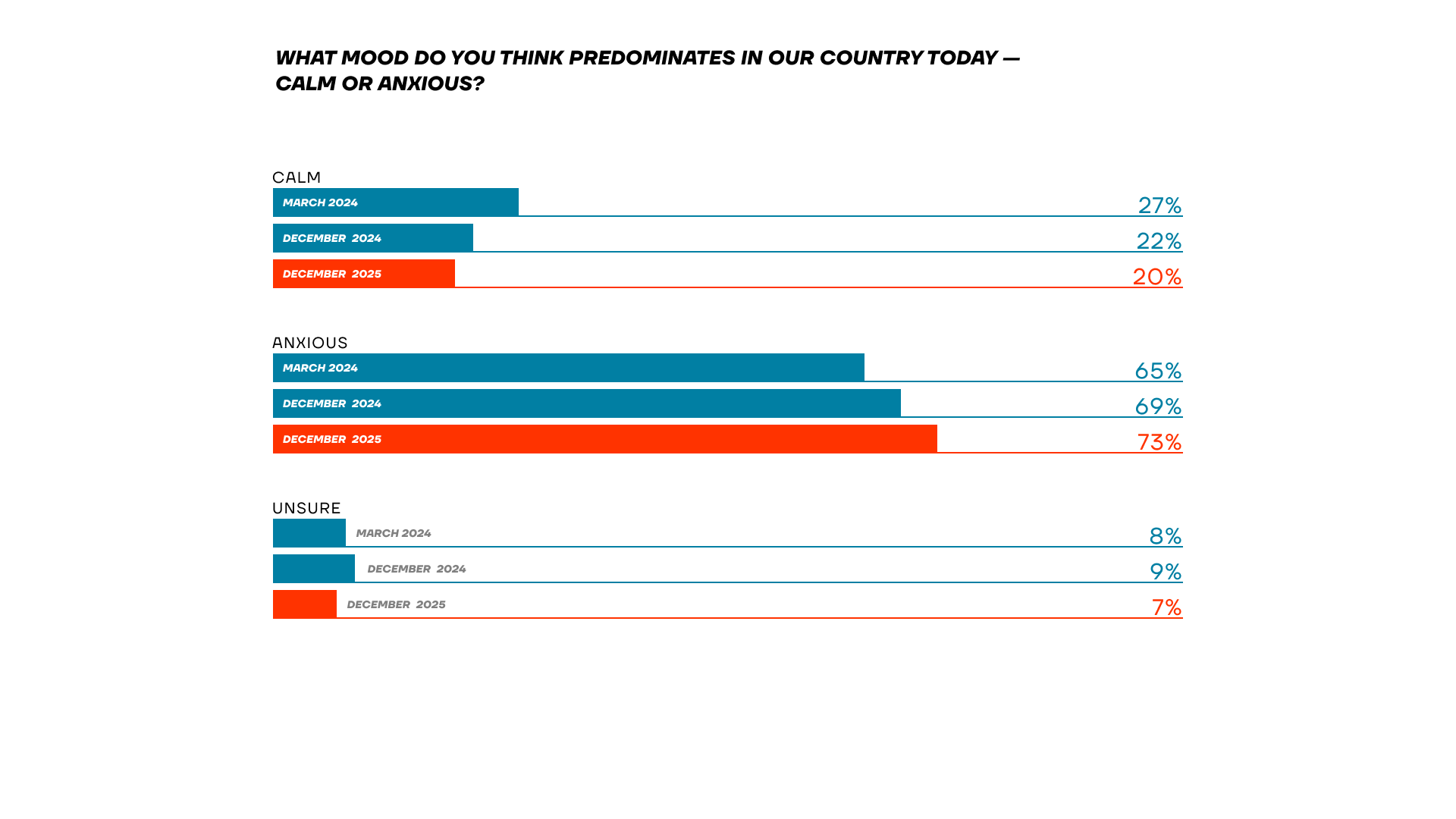
When it comes to anxiety, the situation is even worse. We ask respondents how they feel overall — calm or anxious.
73% of Russians say they feel anxious, while only 20% feel calm.
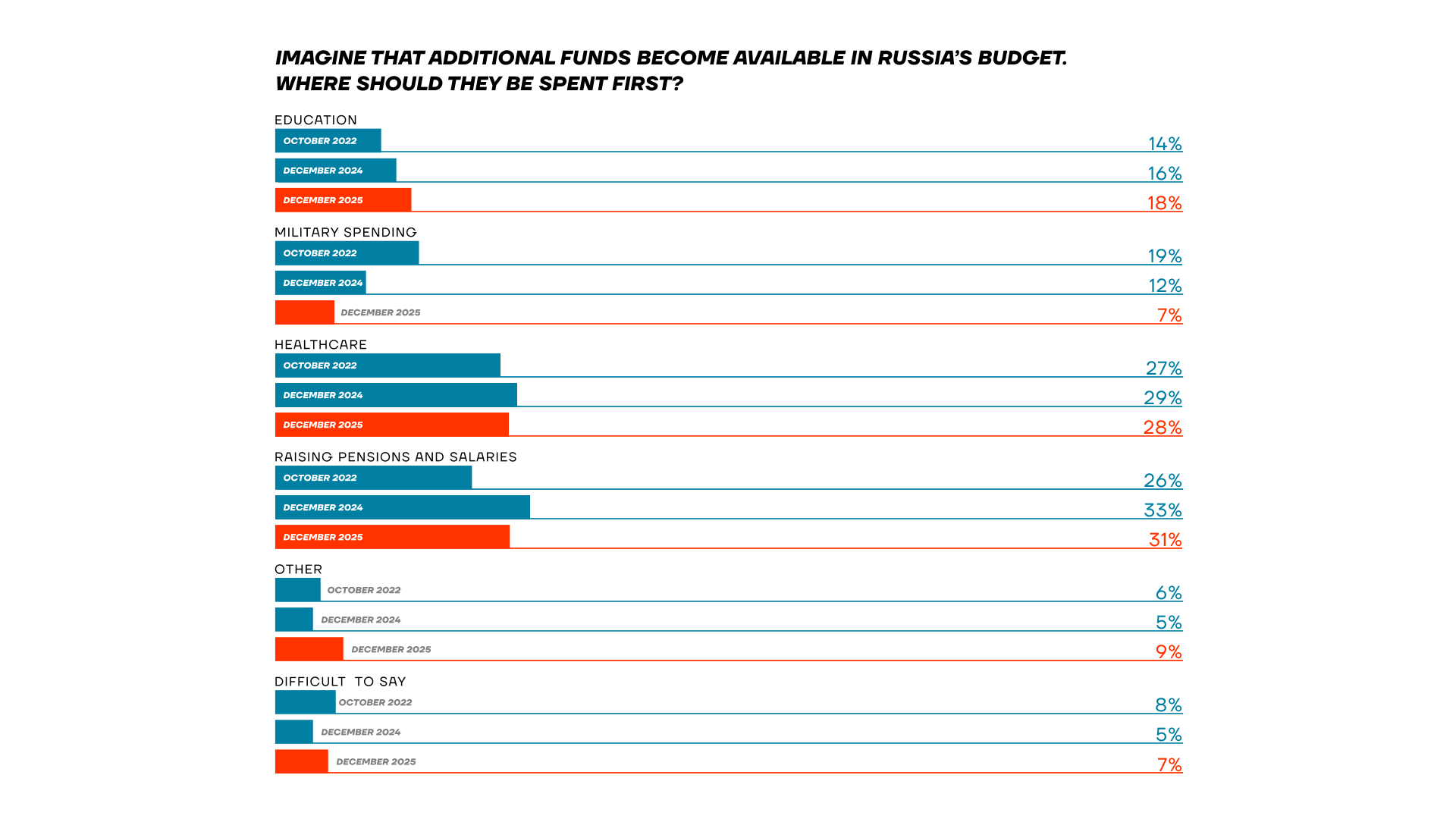
What should money be spent on?We deliberately phrase the question about support for the war this way. It allows us to capture honest answers without putting people who oppose the war at risk.
Russian society does not want war. It does not want money spent on war. People simply want to live normal lives and earn a decent living. They see how their salaries and pensions, healthcare and education, and their children’s futures are being burned up in the furnace of war.
Here is the real level of support for Putin’s war in Russia — just 7%.
This conclusion is also confirmed indirectly through another question.
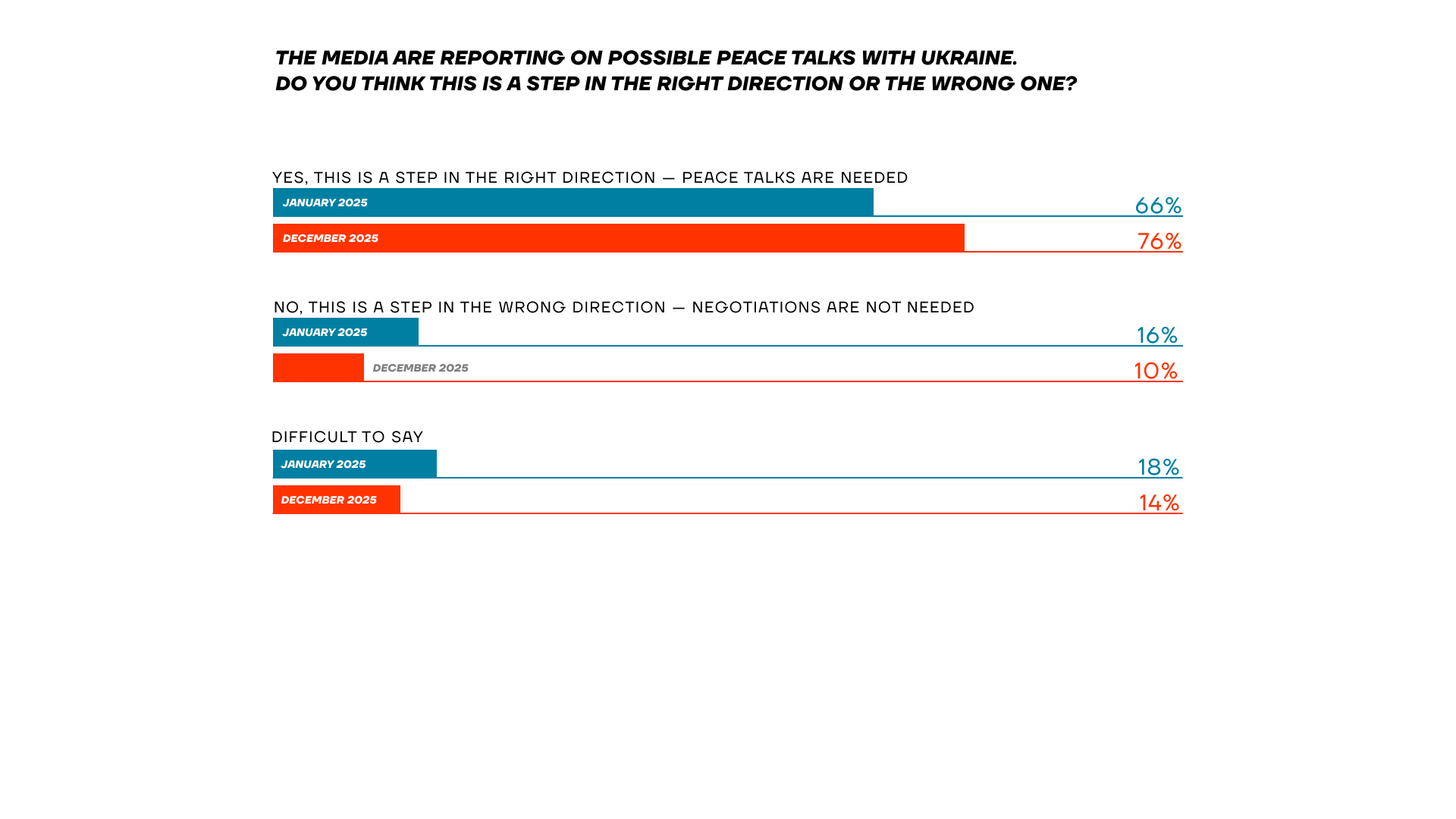
While Putin continues to invent new pretexts to prolong the war and derail any genuine steps toward peace, public demand is clear and unequivocal: peace talks are needed, and the war must end.
But it is becoming increasingly difficult for Putin to deceive Russians. The share of people who believe the war will end soon is steadily declining — despite the regime’s attempts to project “readiness for peace.” Nearly half of respondents believe the fighting will continue, even though, as we’ve seen, the war itself is deeply unpopular. People want peace as soon as possible and do not want to spend money on war.
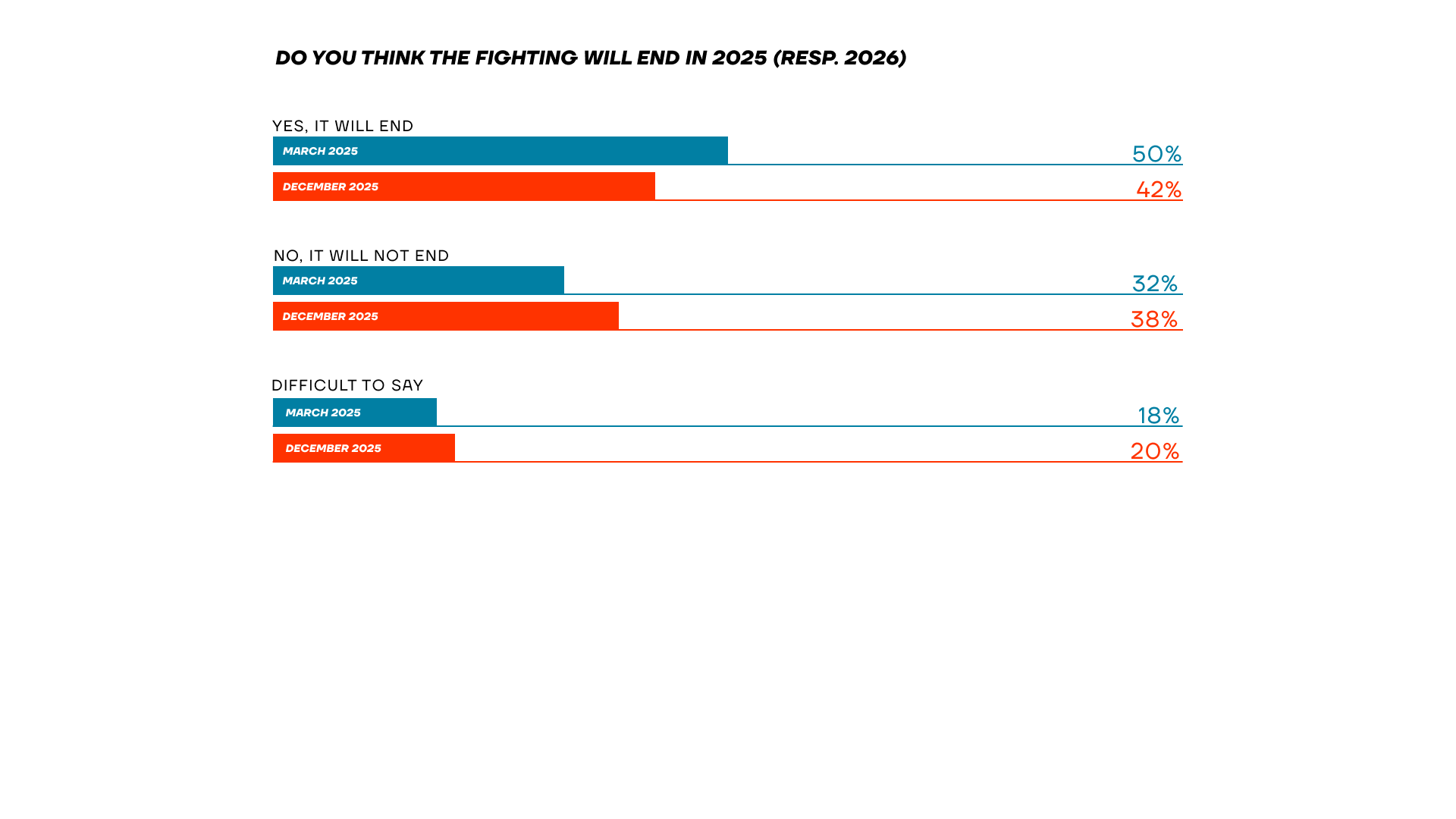
Russians’ patience is running out. Trust in Putin is falling. Support for the war is at a minimum. And it is becoming ever harder for Putin and his propaganda machine to keep the situation under control.